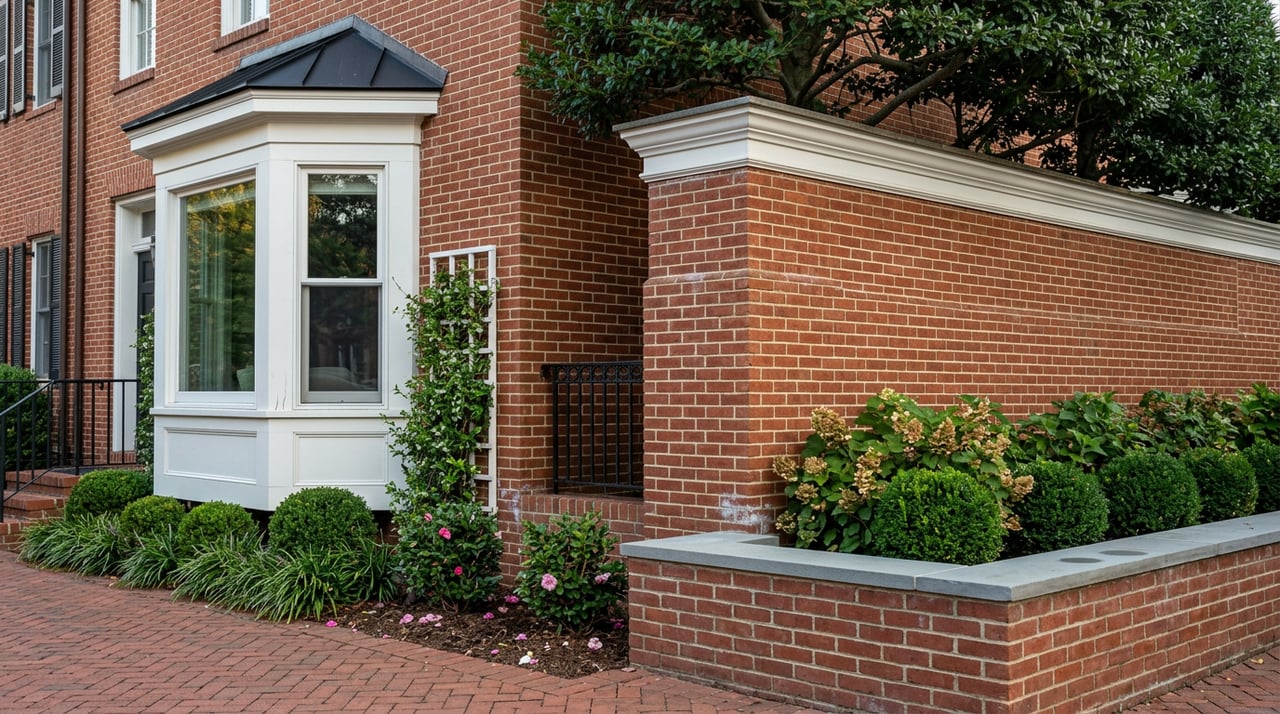
Picture a buyer standing on the sidewalk in front of a 1920s cottage two blocks off Canton Street, already mentally repainting the shutters a deeper green and picturing a paint swatch for the front door. They assume that decision, along with everything else about the house, needs a stamp of approval from the city before they touch it. It doesn't. The one change they're already planning in their head is the one thing Roswell's Historic Preservation Commission has no legal authority to regulate. Everything else on their mental list, the windows, the porch railing, the fence they want to add along the side yard, does require a hearing.
That reversal is the part of buying in Roswell's Historic District that catches people off guard, and it matters more this year than it has in a while, because 2026 also brought a new state financial incentive that changes what a substantial renovation actually costs an owner-occupant.
The Approval Everyone Braces For
Roswell's Historic District covers 640 acres and has been listed on the National Register of Historic Places since 1974, built around Greek Revival architecture and a planning history the city still actively protects. The Historic Preservation Commission, a panel of citizen volunteers where a majority must have real background in history or architecture, reviews design changes across that entire footprint. Roswell's preservation program itself has been certified under state and national historic preservation law since January 15, 1992.
If you own or occupy a property inside the district and want to make an external material change, you need the Commission's sign-off first. Under Georgia's Historic Preservation Act, a "material change in appearance" is defined broadly: construction of new buildings, alterations to a building's exterior architectural features, demolition or relocation of structures, and changes to walls, fences, steps, or other appurtenant features all fall under that definition. The process runs through a Certificate of Appropriateness, and City of Roswell requires every applicant to complete an orientation with staff before submitting an application.
The One Thing the Commission Cannot Touch
Here's the carve-out almost nobody researches until they're standing in a paint aisle wondering if they need permission. Georgia's Historic Preservation Act specifically excludes exterior paint alterations from the definition of a material change in appearance. In 2014, the Georgia Attorney General's office was asked directly whether Roswell's Historic Preservation Commission could regulate exterior paint color, and the opinion was unambiguous: it cannot, because state law preempts the city from expanding its own ordinance to cover something the state statute already excludes.
So the item most new owners assume needs a hearing is the one item the Commission is legally barred from touching, while the items they assume are cosmetic, a different porch railing profile, a fence, a change to window style, sit squarely inside its jurisdiction.
What Actually Triggers a Hearing
If you're planning work on a Historic District property, these are the categories that require a Certificate of Appropriateness before you start:
- New construction anywhere within the district
- Any change to a building's exterior architectural features, including window and door style, siding material, and roofing
- Demolition or moving of an existing structure
- Fences, walls, steps, and other exterior appurtenant features
- Changes to external environmental features on the property
Paint color is the named exception. Everything on that list above requires drawings, photographs, or plans submitted to the Commission and approved before work begins.
The Calendar That Decides Your Timeline
This is where the math gets specific enough to plan around. The Historic Preservation Commission meets once a month, and the remaining 2026 dates are set: September 9, October 14, November 12, and December 9, all at 6 p.m. in the Council Chambers at 38 Hill Street.
As of this writing, the August 12 meeting has passed, so the next real opportunity for most buyers is September 9. Miss that one and the following meeting is October 14. For a buyer hoping to have exterior work done before winter, that calendar is the actual constraint on the timeline, and it's worth building into any offer or closing date before assuming a contractor's schedule is the only variable.
2026 Changed the Financial Math
For years, the strongest state and federal historic tax tools mostly rewarded income-producing property, not the owner-occupant restoring a family home. The Georgia Department of Community Affairs says the federal 20 percent historic rehabilitation credit still works that way. That changed at the state level in 2026. The Georgia Department of Community Affairs says Georgia's Historic Home Tax Credit Program opened applications on October 1, 2025, with a rule that rehabilitation work could not actually begin until January 1, 2026, when the program took effect. The Georgia Department of Community Affairs says the program is built specifically for owner-occupied primary residences that are locally designated or contributing to a local historic district, which describes a meaningful share of homes inside Roswell's boundary. Applicants seeking eligibility through a local district now need a Local Designation Confirmation Form, completed by the local government at the homeowner's request after a preliminary eligibility review by the state's Historic Preservation Division.
Paired with that is Georgia's Preferential Property Tax Assessment Program, which freezes the county tax assessment on a rehabilitated historic property for eight and a half years, provided the rehabilitation increases the building's fair market value by 50 to 100 percent depending on its use. The freeze doesn't disappear all at once either. The Georgia Department of Natural Resources says that in year nine, the assessment climbs by half the difference between the frozen value and the current assessment. In year ten, it moves to full current value.
Put together, a substantial rehabilitation on a Historic District home in Roswell now has a state income tax credit and a multi-year assessment freeze working in the same direction, something that mostly wasn't available to a typical owner-occupant before this year.
Why the Numbers Look Different Once You Split the District Out
Citywide market data tends to flatten Roswell into one number, but the district behaves differently once you look at how long homes actually sit. As of March 2026, homes in the Historic District carried a median 30 days on market, while Martin's Landing moved in 23 days, Horseshoe Bend in 37, Barrington in 46, and Holcombs Crossing in 48.
| Roswell area | Median days on market (March 2026) |
|---|---|
| Martin's Landing | 23 |
| Roswell Historic District | 30 |
| Horseshoe Bend | 37 |
| Barrington | 46 |
| Holcombs Crossing | 48 |
The Historic District sits in the middle, faster than several suburban pockets but slower than the fastest-moving one. That's consistent with a district where turnkey, already-approved homes move quickly while properties that clearly need exterior work sit longer, because buyers who know the process are pricing the Commission's calendar into their offer.
What This Means If You're Weighing a Project House
A Historic District listing that needs a new roofline, replacement windows, or a fence isn't a house you can close on and start working on the following Monday. It's a house where the renovation timeline runs through a monthly public meeting, and now, potentially, through a state tax credit application that has its own paperwork and eligibility review. None of that makes the district a bad place to buy. Barrington Hall and Bulloch Hall, both dating to the 1830s and 1840s, are part of why this district carries the weight it does, and that character is exactly what draws design-minded buyers here in the first place. It just means the renovation plan has to be built around the calendar and the paperwork from day one, not discovered after closing.
This is the part of a Historic District purchase or listing where a design-forward, hands-on approach earns its keep. Knowing which changes are cosmetic and immediate, which ones need a Certificate of Appropriateness months out, and which ones might now qualify for a state tax freeze changes how a seller stages a listing and how a buyer times an offer.
A Few Questions Buyers Ask
Does repainting my house in the Historic District require city approval? No. Exterior paint color is explicitly excluded from Georgia's definition of a material change in appearance, and a 2014 Georgia Attorney General opinion confirmed Roswell's Historic Preservation Commission has no authority to regulate it.
What if I just want to add a fence? That does require a Certificate of Appropriateness. Fences, walls, and steps are named directly in the state's definition of exterior changes requiring approval.
How long does the property tax freeze last, and what do I need to qualify? Georgia's Preferential Property Tax Assessment Program freezes the county assessment for eight and a half years, provided the rehabilitation increases the building's fair market value by 50 to 100 percent depending on use. The freeze phases out over years nine and ten rather than ending all at once.
If you're weighing a Historic District purchase or trying to figure out whether a renovation plan will clear the Commission before your ideal closing date, that's exactly the kind of groundwork Pamela Bills walks clients through before an offer goes in, not after. Schedule a free consultation and bring the address. We'll map out what the house actually allows before you fall for the shutters.
This article is general information, not legal, tax or financial advice. Consult a qualified professional about your situation.