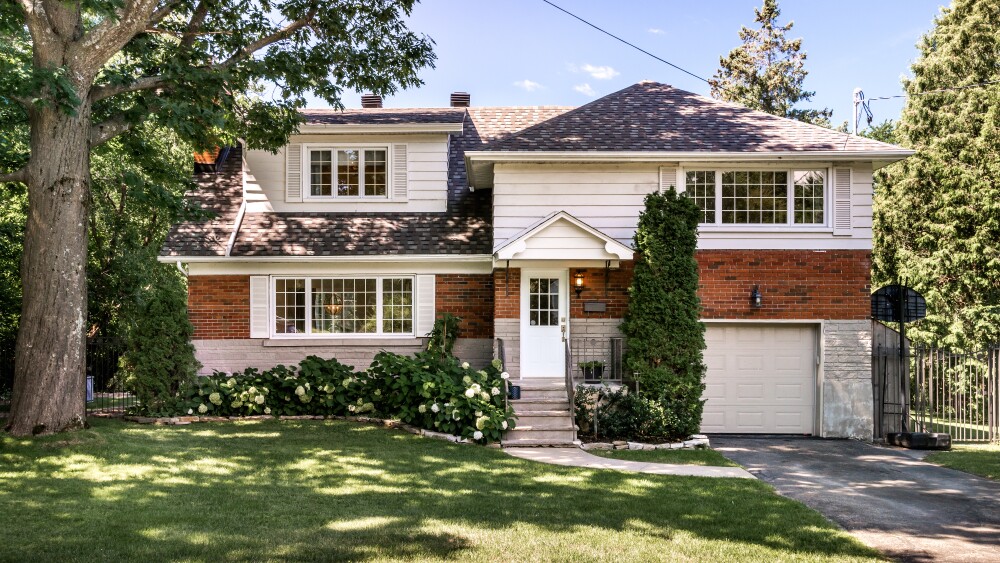
Every seller in Johns Creek studies the same three numbers before listing: the neighbor's recent sale, the median on the portals, and the price per square foot their agent pulls from the CMA. Those numbers tell you what the market will pay for a well-prepared home. They do not tell you what it will pay for yours.
The number that actually decides the outcome for homes built between roughly 1993 and 2005 is not on any portal. It is a single yes-or-no question buried on page two of the Georgia Association of Realtors Form F301, and if you answer it wrong, or answer it right without a plan, the market's softening in mid-2026 will find its way into your net proceeds.
The Question the Form F301 Actually Asks
The Georgia Association of Realtors added a synthetic-stucco question to its property disclosure statement in January 1997, and the current F301 still carries it. The form is an exhibit to the purchase and sale agreement, and Georgia's underlying doctrine is caveat emptor, which means the disclosure line is one of the few places where the seller carries a specific, written duty of knowledge.
Has any part of the exterior of the dwelling been constructed with synthetic stucco?
That is the pivot. A "yes" or a "don't know" tells the buyer's agent to order a separate EIFS moisture inspection instead of relying on the general home inspector's walk-around. A "no" without evidence is the answer that gets sellers into trouble later, because the buyer's inspector runs the thump test anyway: hollow give under the knuckles means synthetic, rock-hard resistance means hardcoat.
Roughly a decade of Johns Creek executive-home construction sits inside the window where synthetic stucco was the fashionable choice, and Alpharetta-area agent Jeff Aughey's long-standing consumer guide is blunt about the trade: an EIFS home takes about 20 percent longer to sell than a comparable brick home and typically closes at a discount. Not because the material is unsafe when maintained. Because a percentage of qualified buyers filter it out of their search before they ever click the listing.
What That Discount Looks Like in a 2026 Market
Three data points anchor where Johns Creek sits right now, and they do not agree, which is the point.
- July 2026, active listings: median list price around $769,000, roughly $241 per square foot, days on market at 35, down about 6 percent year over year.
- February 2026, closed sales: median sale price near $700,000, days on market at 36 versus 27 the prior year.
- May 2026, Zillow's Home Value Index: about $651,000, up a tenth of a percent year over year, with well-prepared listings still going pending in around nine days.
The spread between $651K and $769K is the market telling you it will pay a premium for turnkey and punish everything else. In 2021 a buyer would waive the EIFS inspection to win the house. In 2026 a buyer who has waited 35 days for the right listing uses that inspection as leverage. On a $700,000 sale, a 3 to 5 percent repair-and-price-cut concession is $21,000 to $35,000, and that is before the extra weeks of carrying costs.
Where the Exposure Is Concentrated
The stock most likely to trigger the F301 question sits in a handful of established golf and executive communities. If your home is inside one of these and was built during the window, assume the buyer's inspector will show up with a moisture meter regardless of what the disclosure says:
- Country Club of the South
- St. Ives Country Club
- St. Marlo Country Club
- Medlock Bridge
- River Farm
- Horseshoe Bend
- Seven Oaks
The failure points inspectors actually find are predictable: sealant failure below and beside windows, missing or improperly detailed kickout flashings where a roof meets a wall, unsealed penetrations from decorative screws and light fixtures, and foam board that was installed too close to grade, which invites both wicking moisture and termite paths. None of these problems are catastrophic in isolation. All of them look catastrophic on an inspector's PDF at 9 p.m. the day before the due-diligence deadline.
The Pre-Listing Sequence That Keeps the Money
The reason to run this before the sign goes in the yard, rather than after a buyer's inspector runs it in week two of due diligence, is control. You choose the inspector, you choose the contractor, you choose the timing, and you choose whether repairs get folded into staging or itemized into a concession letter.
- Confirm the exterior material honestly. The thump test on multiple elevations, plus a look at the trim depth around windows, is usually enough for a listing agent to know what she is dealing with before writing the F301.
- Order the EIFS-specific inspection early. Stucco Inspections & Repairs Inc. at 9810-B Medlock Bridge Road works this stretch of North Fulton, and firms like Superior Home Inspections and AllSouth Home Inspections offer stucco, radon, and thermal-imaging packages that surface the other 1990s-era items in the same visit.
- Get bids on any flagged repair before you list. Two or three, in writing, so the buyer's later ask is priced against a document, not against the buyer's imagination.
- Consider the MoistureFree Warranty. Once documented repairs pass a Certified Repair Analysis re-inspection, a Stucco Bond warranty transfers with the home. It does not raise the price. It removes the reason a nervous buyer walks.
- Photograph the corrections. Dated photos of the kickout flashing, the caulk joints, and the foam-to-grade cutback are the single most effective response to a repair request that arrives after the option period opens.
Sellers who do the sequence in this order tend to close on their list-price contract. Sellers who wait for the buyer's inspector to write the story do not.
The Items Sitting Next to Stucco on the Same Inspection Report
An inspection ordered for stucco is rarely just about stucco. Johns Creek's building era produced a cluster of items that get flagged together, and pretending they are separate delays your response when the report arrives.
HVAC systems in homes of this vintage are into their second replacement cycle, and North Fulton summers punish anything that has skipped a spring service. Improper site grading and clogged gutter runs show up frequently on lots that step down toward the Chattahoochee, and window-seal failure in the same elevations that flag EIFS moisture is common enough that inspectors treat them as a set. Radon deserves a pre-listing test on its own; Johns Creek has pockets where levels come back higher than sellers expect, and a mitigation system installed proactively is a $1,500 line item, while one negotiated at closing is a $1,500 line item that also costs you a week of leverage.
How the Warranty Actually Reads to a Buyer
A buyer looking at two similar homes in Medlock Bridge, one with a transferable MoistureFree Warranty and a folder of documented repairs, the other with a "no" on F301 that the inspector is about to challenge, is not weighing the same offer. The warranty is not a marketing prop. It is a reason the buyer's lender does not slow the file down, a reason the buyer's insurer writes the binder without extra questions, and a reason the appraiser has comparable data to lean on. In a market where the closest thing to certainty is what you can hand a buyer in writing, that folder is the difference between a 35-day listing and a nine-day one.
A Few Questions That Come Up
Do I have to disclose synthetic stucco if I genuinely do not know what is on my house? The F301 allows a "don't know" answer, but the buyer's inspector will make the determination anyway. The cleaner path is to find out before you sign the form.
Does a Certified Repair Analysis reduce my sale price? The inspection and any needed repairs are seller costs, but the closed-sale data on warrantied stucco homes generally holds up better against comparable brick sales than un-warrantied stucco does. The math tends to favor doing the work.
What if my home was built after 2005? The synthetic-stucco question still appears on F301, and drainable EIFS systems installed after the mid-2000s have their own inspection protocol. Age reduces the probability, not the disclosure duty.
Selling in Johns Creek in 2026 is not harder than it was in 2021. It is more specific. The homes that clear the market at list price are the ones whose sellers answered the hard question on the disclosure form before a buyer's inspector answered it for them. If your home falls inside the window, and especially if it sits inside one of the communities where the stock is concentrated, the conversation is worth having before the sign goes up. Pamela Bills works this preparation, from the pre-listing inspection sequence through staging and closing, as a single concierge process. Schedule a Free Consultation to map yours.