Wondering what “swim/tennis” really gets you in a Johns Creek neighborhood? If you are weighing a move with kids, activities, and busy schedules, the right HOA amenities can simplify your week and shape your community life. In this guide, you will see what most Johns Creek HOAs actually include, how those amenities affect your lifestyle and dues, and what to ask before you commit. Let’s dive in.
What Johns Creek HOAs Include
Johns Creek is known for well-kept, family-oriented neighborhoods with community amenities. Offerings vary by age and price point of the subdivision, but you will see consistent themes.
Pools and splash zones
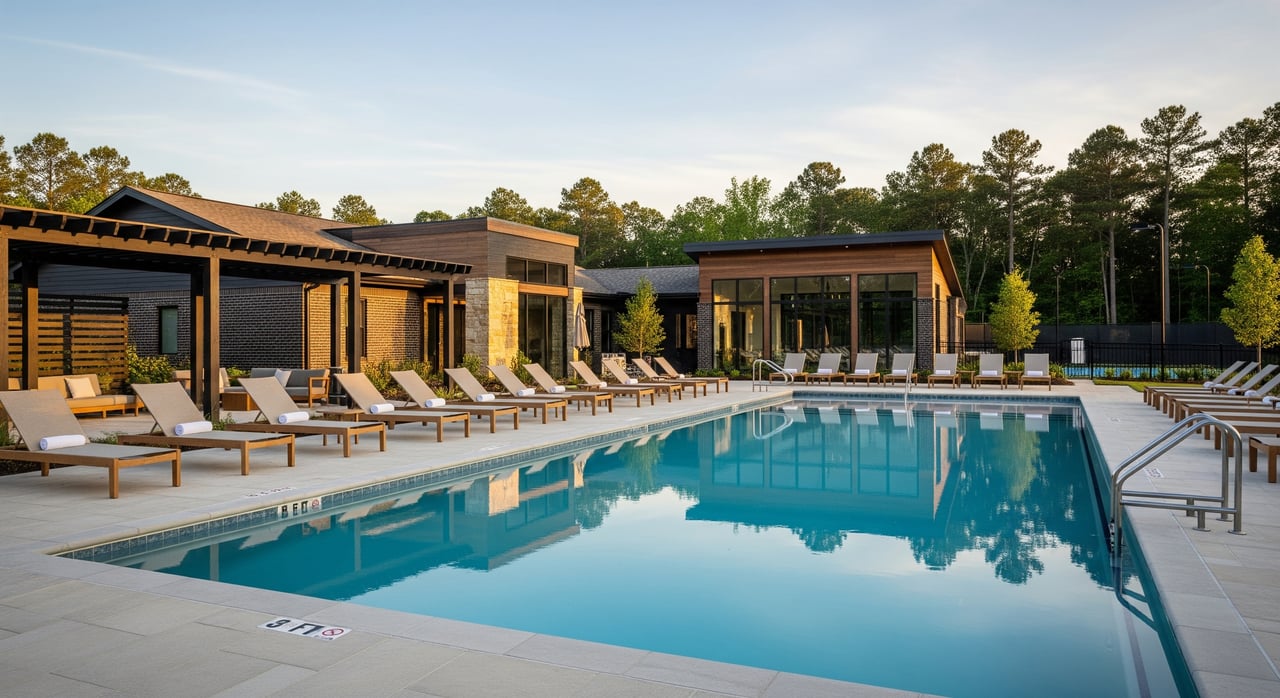
Most swim communities include at least one outdoor pool, often with a main lap or competition-style pool plus a separate family or kiddie pool. Expect fenced decks, shaded seating, and a pool house with restrooms and changing rooms. Seasonal lifeguards are common from roughly May through September. Heated pools are less common and tend to appear in higher-end communities. Some newer neighborhoods add splash pads for younger children.
Courts for tennis and pickleball
Hard tennis courts are the norm, with lighting in many larger associations for evening play. Pickleball is growing fast and some courts have added painted lines or full conversions. Several HOAs organize clinics, casual round-robins, and recreational league play.
Clubhouses and social spaces
A typical clubhouse offers a rentable event room, kitchenette, meeting space, and restrooms. Some include a small fitness room or HOA office. Rental policies and fees vary by community, so review the rules if you plan to host gatherings.
Trails, sidewalks, and play areas
Sidewalks, pocket parks, and neighborhood walking trails are common. Larger communities may connect to nearby trails. Playgrounds and small play fields are frequent features.
Other common services
Expect landscaping of shared areas, pond or entry maintenance, and common-area lighting. Some neighborhoods are gated. Full-time security is less typical and tends to be associated with private or gated communities. Confirm exactly what services your dues cover.
How Amenities Shape Daily Life
Amenities are more than a list. They influence your daily rhythm, your social circle, and how your kids spend free time.
Lifestyle upsides
- Family programming on-site can cut drive time. Swim lessons, summer teams, tennis clinics, and day camps make it easier to keep kids active.
- Community bonds grow through clubhouse events, holiday gatherings, and volunteer committees. This can make it easier to meet neighbors and feel rooted.
- Safety and convenience features like fenced pools, controlled access, and seasonal lifeguards provide peace of mind.
- HOA maintenance of common areas saves you weekend chores compared with non-HOA neighborhoods.
- Amenity-rich areas often attract a broad buyer pool. That demand can support resale appeal when you decide to move.
Potential tradeoffs
- Rules and restrictions can feel strict. HOAs regulate guest use, noise, and exterior appearance. Make sure the boundaries fit your lifestyle.
- Crowding and scheduling can be real at peak times like weekend afternoons and summer evenings. Visit during peak hours to see the vibe.
- Events can increase noise and on-street parking. Ask about event frequency and parking rules.
- Programming quality depends on HOA leadership and management. A strong board and professional manager can make a difference.
What Drives HOA Dues
Dues reflect the scope of amenities and the cost to operate, insure, and maintain them.
Core cost drivers
- Operations: lifeguard and pool staffing, utilities, water, chemicals, janitorial
- Maintenance: pool resurfacing, deck and court resurfacing, clubhouse HVAC and roof, playground replacement
- Insurance: general liability for pools and clubhouses, directors and officers coverage
- Professional services: management company, landscaping, lifeguard vendors, legal and accounting
- Capital reserves: planned contributions for major repairs and replacements
- Programming and supplies: swim team equipment, event supplies, signage, training
Typical fee ranges
These ranges are based on suburban Atlanta norms and vary by neighborhood size and complexity.
- Smaller or basic-amenity HOAs: commonly under 100 per month
- Mid-tier swim/tennis with seasonal staffing: approximately 150 to 350 per month
- Larger planned communities with robust programming: approximately 300 to 600 plus per month
Some neighborhoods bill annually or quarterly instead of monthly. In communities with separate country club facilities, club initiation and membership fees may be separate from HOA dues. Confirm what is included.
Reserves, studies, and special assessments
Healthy reserve funds help avoid sudden special assessments for big-ticket items like pool renovations or court rebuilds. Ask if the HOA has a recent reserve study, the current reserve balance, and any planned capital projects. If reserves are thin and amenities are aging, the risk of a special assessment increases.
Insurance and Liability Basics
Your HOA’s master policy typically covers liability and property damage for common areas like pools and clubhouses. You still need your own homeowner’s policy for your dwelling and personal liability. Pools increase liability exposure, so verify that the association maintains adequate coverage and that vendors like lifeguard companies meet insurance requirements. Your agent can help you request the association’s insurance certificate and policy declarations.
What To Ask Before You Buy
Use this checklist to compare neighborhoods and confirm the true cost and value of swim/tennis amenities.
Documents to request
- CC&Rs, bylaws, and rules and regulations
- Current budget and the most recent month-to-date financials
- Latest reserve study and current reserve balance
- Meeting minutes for the past 12 to 24 months
- Association insurance certificate and declarations page
- Vendor list and core contract terms for pool, landscaping, and management
- Governance structure and member lists if provided
- Details on any pending or recent special assessments
- Pending litigation or claims
- Amenity rules, guest policies, clubhouse rental rules, and court reservation procedures
Operational details to confirm
- Pool season dates and daily hours for the year
- Whether lifeguards are on duty at all open hours
- Whether the pool is heated and when heating is used
- Guest policies, limits, and any guest fees
- Swim lessons, swim team, and any additional costs or tryouts
- Court reservation system, lighting hours, and whether lessons or leagues are offered
Financial and governance questions
- Current monthly or annual dues and what they include
- Date and reason for the last dues increase
- Whether a reserve study is current and the association’s reserve funding status
- Any planned special assessments in the next 1 to 5 years
- Who manages the association and how to contact them
Maintenance and condition checks
- Dates of last pool resurfacing and court resurfacing or rebuild
- Recent inspection reports for pool equipment and systems
- Clubhouse condition, including HVAC, acoustics, and parking capacity during events
Rules and enforcement
- Rental or investor restrictions and how violations are handled
- Typical fines and frequency of enforcement actions
- Quiet hours, event limits, and policies on signage and decor
Match Amenities To Your Life
A great amenity package should fit how you live today and two to five years from now.
- If you have younger kids, look for a family or kiddie pool, splash pad, and beginner swim lessons. A clubhouse with indoor space can support rainy-day playdates and birthday parties.
- If you have teens, prioritize lighted courts, a clubhouse they will actually use, and consistent programming like leagues or teen socials.
- If you entertain often, review clubhouse rental policies, fees, rules on guest counts, and parking capacity.
- If you work long hours, evening court lighting and clear pool schedules can be worth the premium.
Also consider proximity inside the neighborhood. Living near the pool can be very convenient, but you may experience more activity, noise, and traffic during peak times. Walk the area at a busy hour to gauge fit.
Visit Like a Pro
Seeing amenities in person tells you more than a brochure ever will.
- Visit during peak periods like weekend afternoons in summer. Note crowd levels, parking, and the overall vibe.
- Walk the pool deck to check fencing, gates, and restroom condition. Look for signs of recent maintenance.
- Inspect tennis and pickleball courts for cracks or drainage issues and test the lighting after sunset.
- Step inside the clubhouse. Check finishes, HVAC, restrooms, and any kitchen equipment if you plan to host events.
If you can, chat with a few neighbors. Ask about program quality, event frequency, and how responsive the HOA is to maintenance requests.
Affordability and Value Lens
Think beyond the headline dues. Consider the full picture.
- Add guest fees, clubhouse rental costs, and expected league or lesson fees to your annual estimate.
- Evaluate cost per use. If your family will be at the pool and courts several days a week, the value can be excellent. If you rarely use them, the premium may not pencil as well.
- Consider resale. Amenity-rich neighborhoods often appeal to a broad set of buyers, which can support marketability when it is your time to sell.
The Bottom Line
Swim and tennis HOAs in Johns Creek can deliver big lifestyle benefits, from structured kids’ activities to easy social connections. The best fit balances what you will use most with a fee structure and rule set you are comfortable with. With the right due diligence, you can choose a neighborhood that supports your routines today and your goals for the next chapter.
If you want help comparing neighborhoods, reading HOA documents, and aligning amenities with your family’s needs, reach out to Pamela Bills for clear guidance and a calm, concierge experience.
FAQs
What does “swim/tennis” typically include in Johns Creek?
- Most communities offer an outdoor pool, tennis courts, a pool house or clubhouse, and common-area maintenance. Some add splash pads, fitness rooms, or pickleball.
How much do swim/tennis HOA dues cost in Johns Creek?
- Fees vary by community size and amenities. Many mid-tier neighborhoods run about 150 to 350 per month, while larger planned communities can be 300 to 600 plus.
Are lifeguards provided at neighborhood pools?
- Seasonal lifeguards are common during the main pool season, but coverage and hours vary. Confirm staffing and operating hours with the HOA.
Do HOAs in Johns Creek run swim teams and lessons?
- Many staffed pools sponsor recreational swim teams in spring and summer and may offer lessons. Ask about availability, fees, and any tryout requirements.
Could there be a special assessment for pool or court work?
- Yes. If reserves are underfunded or amenities are aging, the HOA may levy a one-time special assessment. Review the reserve study and capital plans before you buy.